Your Brain Orders Differently When You're Staring at a Screen

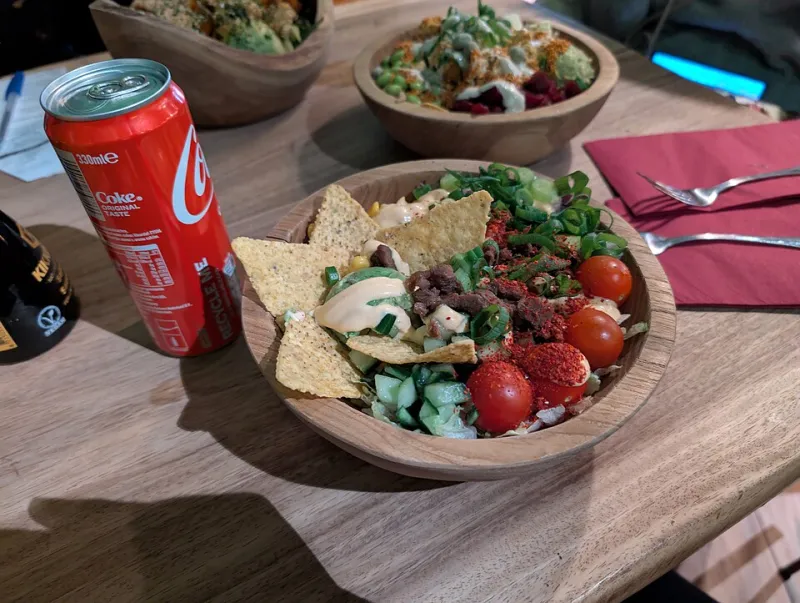
Photo: poke bowl delivery packaging takeout container open lid, via vintagemovieposters.name
There's a specific kind of hunger that hits when you're scrolling a delivery app at 7 p.m. on a Tuesday. You're not standing in line at your favorite poke spot, smelling the sesame oil, watching someone build your bowl in real time. You're on your couch, phone in hand, making a series of taps that will eventually result in food appearing at your door. It sounds simple. But the psychology behind that process — and how it shapes what ends up in your bowl — is more interesting than most people realize.
Poke is a particularly fascinating case study here because it's inherently customizable. Every decision you make compounds. Base, protein, mix-ins, sauce, toppings — the choices stack up fast. And it turns out the context in which you make those choices matters a lot.
The In-Person Effect Is Real
When you're standing at a poke counter, your senses are doing a lot of the work. You see the bright orange of the masago. You smell the marinade on the ahi. Someone hands you a sample of a new sauce and suddenly that's going in your bowl. The experience is tactile, immediate, and a little social. You tend to order bolder, more adventurous combinations because everything looks good right in front of you.
Delivery flips that dynamic. You're working from photos and text descriptions, which are helpful but not the same as seeing a bowl assembled live. Research in consumer behavior consistently shows that visual overload — too many options presented on a screen — leads people toward familiar, lower-risk choices. In poke terms, that usually means defaulting to ahi tuna over something like octopus or salmon belly, and sticking with white rice when you might have grabbed a mixed greens base if it had been right there in front of you.
It's not a bad thing. But it's worth knowing that your delivery order probably skews more conservative than your dine-in order, even if you don't notice it happening.
Travel Time Is a Flavor Variable
Here's something most people don't think about when they're tapping through a delivery order: the bowl is going to sit in a bag for somewhere between 20 and 45 minutes before you open it. That's not a dealbreaker, but it does change which ingredients hold up and which ones quietly suffer.
The biggest casualty is usually crunch. Crispy shallots, tempura flakes, and wonton strips — all those satisfying textures that make a bowl feel complete — go soft fast once they're in a closed container with warm rice underneath. If texture is a big part of what you love about poke, you've got a few options. Some spots will pack toppings separately if you ask, which is absolutely worth requesting. If that's not available, lean into toppings that don't rely on crunch for their appeal: edamame, cucumber, pickled ginger, avocado, seaweed salad. These hold up well and still add dimension.
Sauces behave differently in transit too. A drizzle of spicy mayo that looks perfect in a restaurant photo can pool and soak into the rice by the time your bowl arrives. Ordering sauce on the side is a small move that makes a noticeable difference, especially if you're picky about sauce distribution.
The Screen Fatigue Factor
Delivery apps are designed to keep you engaged, but there's a ceiling. After a certain number of decisions — picking the restaurant, choosing a bowl size, navigating protein options, selecting add-ons — decision fatigue kicks in and you start making faster, less considered choices. You default to the first sauce listed. You skip the premium toppings because adding them requires another tap and another $1.50 charge that feels more significant on a screen than it would at a counter.
The practical fix is to do a little pre-work. If you have a regular delivery spot, take two minutes when you're not hungry to figure out your ideal bowl. Write it down or save it as a note on your phone. When hunger hits and your brain wants to take shortcuts, you've already done the thinking. You'll end up with a better bowl and you'll probably spend less time staring at your screen debating whether edamame is worth it (it is).
Proteins That Travel Well vs. Proteins That Don't
Not all poke proteins are created equal when it comes to delivery. Ahi tuna is the gold standard for a reason — it's firm, it holds its marinade well, and it doesn't change dramatically over 30 minutes in a bag. Salmon is similarly reliable, though it can get a little soft if the bowl is warm.
Cooked proteins — shrimp, scallops, chicken for the non-raw crowd — tend to do fine in transit because they're not as sensitive to slight temperature changes. Tofu is underrated for delivery; it's dense enough to maintain its texture and absorbs sauce beautifully without becoming waterlogged.
The proteins that struggle most are anything with a delicate texture that was meant to be eaten immediately. Thinly sliced yellowtail, for example, is transcendent at a good poke counter and noticeably different after sitting in a container. If you love those more delicate options, save them for dine-in and lean on the sturdier proteins when you're ordering from home.
Building a Delivery-Optimized Bowl
None of this means delivery poke is inferior — it just means it rewards a slightly different approach. Here's a loose framework that tends to work well:
Base: Brown rice or white rice hold up better than greens for delivery. Mixed greens wilt under warm toppings. If you want greens, ask for them on the side.
Protein: Ahi, salmon, shrimp, or tofu. All solid delivery choices. Stick with whatever you know marinates well.
Sauce: Order on the side whenever possible, or ask for a lighter drizzle than usual. You can always add more when the bowl arrives.
Toppings: Prioritize things that don't rely on crunch — avocado, cucumber, edamame, corn, pickled veggies, seaweed salad. If you want crunch, ask for it packed separately.
Extras: Sesame seeds, scallions, and a squeeze of citrus right before you eat can do a lot to refresh a bowl that's been in transit.
The Delivery Bowl Has Its Own Identity
It's tempting to think of delivery poke as a compromise — a lesser version of the real thing. But that framing misses something. The delivery bowl is its own format, and when you build it with transit in mind, it can be genuinely great. You're eating in your own space, on your own schedule, with no line and no noise. That context changes how you taste things too.
The goal isn't to replicate the restaurant experience at home. It's to get the most out of the experience you're actually having — which, on a Tuesday night with nowhere to be, is pretty good on its own terms.