Less Menu, More Magic: The Case for Letting the Chef Decide Your Poke Bowl
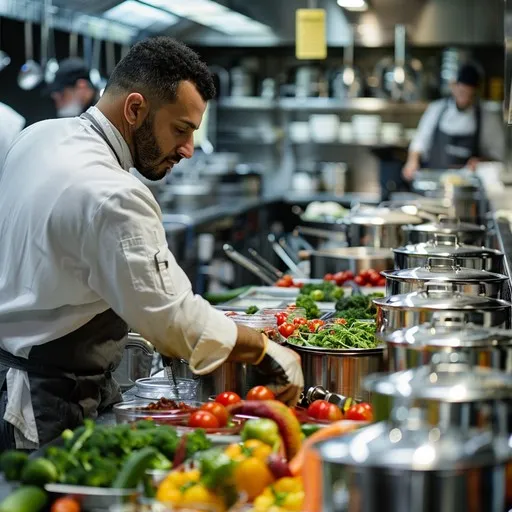
Photo: chef preparing curated poke bowl restaurant kitchen, via images.stockcake.com
Walk into most poke spots across the US and you know the drill. Grab a bowl, pick a size, choose your base, select your protein, stack on the toppings, drizzle the sauce, pay, and somehow feel vaguely unsatisfied even after eating something that looked incredible. Sound familiar?
There's a quiet rebellion happening inside some of the most talked-about poke concepts from Los Angeles to New York, and it's running directly against the build-your-own wave that defined the last decade of fast-casual dining. Instead of handing you a checklist, these spots are handing you a bowl — fully assembled, intentionally designed, and honestly? Kind of perfect.
So what's behind this shift, and what does it mean for how you eat poke at home?
The Build-Your-Own Boom (And Its Limits)
The customizable poke bowl was a genius concept when it landed on the mainland. It borrowed the Chipotle playbook and applied it to Hawaiian food culture, letting diners feel in control while restaurants kept operations streamlined. For a while, it worked beautifully.
But somewhere along the way, the format started to buckle under its own weight. Menus expanded. Topping lists grew to 30 or 40 items. Sauce options multiplied. And with every new addition, a strange thing happened — the bowls started getting worse, not better.
Customers weren't building balanced, thoughtful combinations. They were piling on everything that sounded good in isolation, ending up with bowls that were visually impressive but culinarily chaotic. Mango AND kimchi AND crispy garlic AND spicy aioli AND edamame, all sitting on top of the same piece of ahi. It sounds bold. It tastes like confusion.
Decision Fatigue Is Real, and Poke Isn't Immune
Psychologists have been talking about decision fatigue for years — the idea that the more choices we make, the worse we get at making them. Grocery stores figured this out. Netflix figured this out. And now, slowly, poke restaurants are figuring it out too.
When you walk up to a counter with 40 potential ingredients, your brain isn't thinking like a chef. It's thinking like a shopper. You're scanning for familiar items, defaulting to safe choices, or swinging to the opposite extreme and grabbing everything that sounds remotely interesting. Neither approach produces a great bowl.
Chef-curated menus sidestep this entirely. The kitchen has already done the thinking. They've considered how the fat content of the fish interacts with the acidity of the sauce. They've thought about texture contrast and color balance and whether the heat level builds or overwhelms. You just get to eat the result.
What the New Wave of Poke Spots Is Doing Differently
Some of the most buzzed-about poke concepts emerging right now look nothing like the assembly-line spots that dominated the mid-2010s. They're smaller menus — sometimes just five or six signature bowls. The combinations are specific. The ingredients are sourced with intention. And critically, nothing is negotiable.
That last part feels radical in a food culture that's trained Americans to expect full customization as a baseline right. But chefs will tell you that the inability to swap things out isn't a limitation — it's a feature. When a dish is designed as a whole, pulling one element apart can unravel the entire thing.
Think about it the way you'd think about a great cocktail. You wouldn't ask a bartender to swap out the Campari in a Negroni because you're not sure about bitter flavors. The bitterness is the point. The balance is the point. The same logic applies to a well-constructed poke bowl.
The Psychology of Trusting the Chef
There's something interesting that happens when you take customization off the table. You stop second-guessing yourself. You stop wondering if you should have added more spice or gone with a different base. You just eat — and because the bowl was built with intention, you usually enjoy it more than you expected.
This isn't just anecdotal. Research on consumer satisfaction consistently shows that people who choose from smaller, curated menus report higher satisfaction with their meals than those who navigated sprawling options. The paradox of choice is real: more options create more anxiety, more second-guessing, and ultimately more disappointment.
Chef-driven poke takes that anxiety out of the equation. You're not the architect anymore. You're the guest. And honestly, being a guest feels pretty good.
Bringing the Chef Mindset Into Your Home Kitchen
Here's where this gets practical. If you're making poke bowls at home — and if you're reading Poke Tab, there's a solid chance you are — the curated approach is genuinely transformative.
Instead of pulling out every ingredient in your fridge and building by instinct, try starting with a single flavor profile and working outward from there. Pick your anchor — usually the protein and its marinade — and let everything else serve that central idea.
If you're going with a sesame-soy marinated tuna, ask yourself what complements that profile without competing with it. Creamy avocado, yes. Pickled cucumber for brightness, yes. Crispy shallots for texture, yes. Mango salsa AND spicy mayo AND furikake AND everything bagel seasoning? Probably not all at once.
The goal isn't restriction for its own sake. It's coherence. A bowl with five ingredients that all make sense together will almost always outperform a bowl with fifteen ingredients that were chosen independently.
A few practical rules to cook by:
- Pick one sauce, not three. A single well-chosen sauce ties a bowl together. Multiple sauces compete.
- Limit yourself to two textural elements. Crunchy and creamy is a classic pairing. Adding chewy, crispy, and silky on top of that turns into chaos.
- Let the fish lead. The protein is the star. Everything else is supporting cast.
- Think in threes for toppings. Three intentional toppings beats seven random ones every time.
What This Means for the Poke Industry Going Forward
The shift toward chef-curated bowls isn't just a trend — it's a maturation. Poke in America has grown up enough that restaurants can now make a compelling argument for editorial control over their menus. That would have been a harder sell ten years ago when the cuisine was still establishing itself on the mainland.
It also signals something bigger about where fast-casual dining is headed. Consumers who came of age with full customization as the norm are starting to appreciate the opposite: expertise, curation, and the confidence that comes from a kitchen that knows exactly what it's doing.
For home cooks, the message is clear. You don't need more options. You need better decisions. And sometimes the best decision is to stop deciding so much, and start cooking with intention instead.
Your next poke bowl doesn't need to be everything. It just needs to be really, really good.