Cracking the Code: What Poke Restaurants Won't Tell You (And How to Build Something Better at Home)
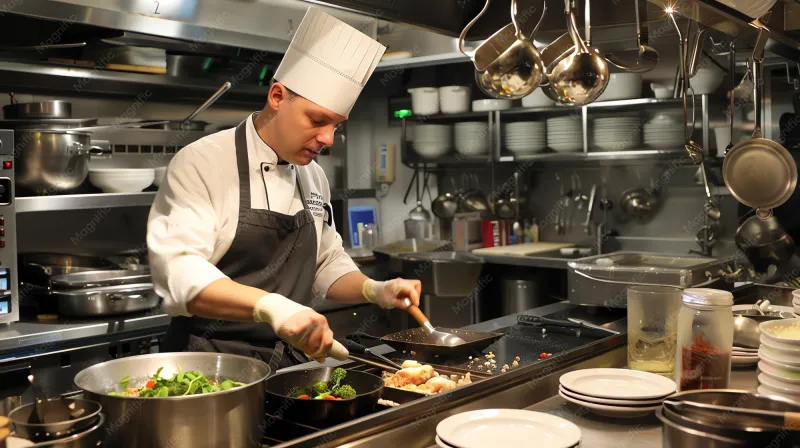
Photo: chef preparing poke bowl in restaurant kitchen with fresh tuna and marinade ingredients, via img.freepik.com
The Menu Tells You What. It Doesn't Tell You How.
Walk into almost any poke restaurant in the country — from a mom-and-pop Hawaiian spot in Honolulu to a fast-casual chain in downtown Chicago — and you'll find a menu that looks deceptively simple. Ahi tuna. Soy sauce. Sesame oil. Scallions. The ingredient list reads like something you could knock out on a Tuesday night with a grocery run and thirty minutes to spare.
So why does it never quite taste the same at home?
That gap between restaurant poke and home poke isn't about access to premium ingredients, though quality fish certainly helps. It's about a layered set of techniques, ratios, and decisions that chefs make deliberately — and almost never talk about publicly. Call it culinary gatekeeping. Call it competitive advantage. Either way, the result is the same: home cooks are left guessing.
We talked to chefs, food scientists, and a few obsessive home cooks who've spent serious time trying to close that gap. Here's what they shared.
The Marinade Is Only Part of the Story
Most people assume the secret lives in the marinade. And honestly, that's a reasonable guess — a restaurant's signature sauce is usually the first thing you notice. But chefs who've worked in Hawaiian-style kitchens will tell you the marinade is almost secondary to timing.
"People think more time in the sauce means more flavor," says one chef who spent years working at poke spots across the West Coast. "But over-marinating breaks down the proteins in the fish. You end up with something mushy and one-dimensional. The magic window is usually somewhere between eight and twenty minutes, depending on the cut."
That specificity is something home cooks rarely think about. We tend to marinate fish for as long as we have — sometimes hours — because that's what we do with chicken or beef. Raw tuna doesn't work that way. It's delicate, and the acid and salt in most marinades start chemically cooking the fish almost immediately.
The takeaway: treat your marinade window like a timer, not an afterthought.
Fat Is the Flavor Carrier Nobody Talks About
Food scientists will tell you that fat is what makes flavor linger on your palate. It's why a dish with a little sesame oil tastes richer and more complex than the same dish without it. Poke restaurants understand this intuitively, even if they don't always articulate it.
The trick isn't just adding fat — it's adding the right fat in the right proportion. Toasted sesame oil is the classic choice, but many restaurant kitchens blend it with something neutral, like a light avocado oil or even a tiny amount of mayo, to smooth out the intensity without losing depth. That ratio is almost never printed on a menu.
At home, start with a base of roughly two parts neutral oil to one part toasted sesame oil. From there, adjust based on your other ingredients. If you're going heavy on umami — think soy sauce, miso, or ponzu — you might want to dial back the sesame to keep things balanced.
The Acid Balance That Most Home Cooks Miss
Acid is what makes a poke bowl taste bright and alive instead of flat and heavy. Most restaurant marinades include some form of it — rice wine vinegar, citrus juice, or a splash of ponzu — but the amount matters enormously.
Too little acid and your bowl tastes muddy. Too much and it overwhelms the fish. The sweet spot is a level of brightness that you feel at the back of your mouth after you swallow, not something you taste aggressively up front.
One food scientist we spoke with described it as "background acidity" — it's doing structural work rather than announcing itself. Her recommendation for home cooks: add your acid in small increments, taste as you go, and stop the moment the flavor of the fish starts to pop rather than compete.
A half teaspoon of rice wine vinegar per four ounces of fish is a reasonable starting point. From there, let your palate lead.
Why Restaurant Poke Bowls Feel More "Complete"
There's something about a well-built poke bowl from a good restaurant that feels finished in a way homemade versions often don't. Part of that is presentation, sure. But a bigger part is textural contrast — something most home cooks underinvest in.
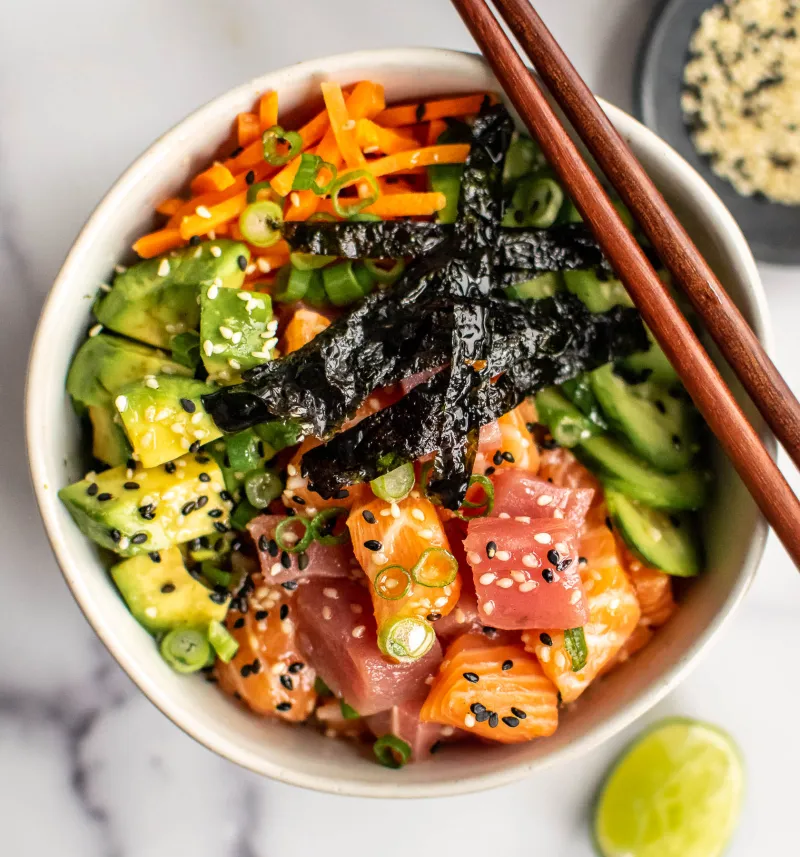
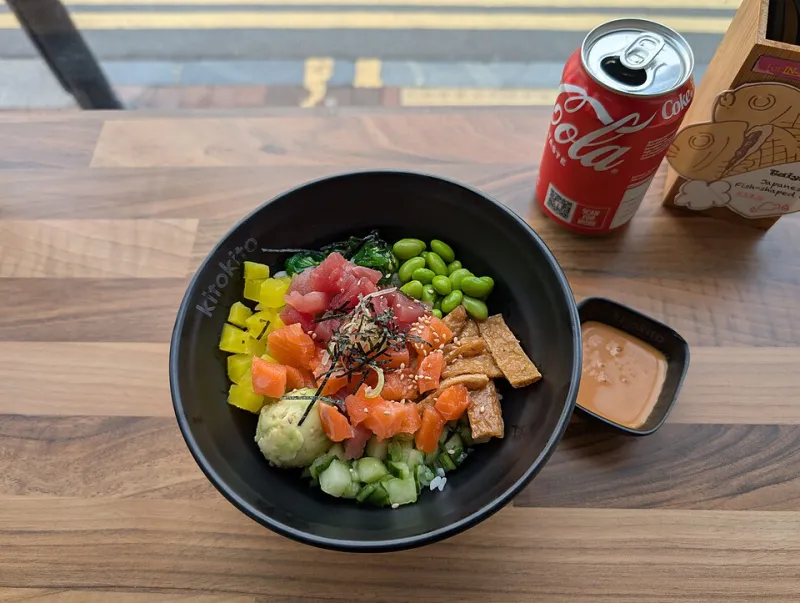
Restaurants tend to think about their bowls in layers: a warm, slightly sticky base (usually sushi rice), cool and silky protein, something crunchy, something creamy, and something fresh. Every component is doing a different job. When one layer is missing or redundant, the bowl loses its sense of completeness.
At home, it's easy to pile on toppings that are all doing the same textural thing — soft avocado, soft edamame, soft cucumber. The bowl looks full but eats flat. Try to make sure at least one element in your bowl adds a sharp crunch. Fried shallots, furikake, crushed macadamia nuts, or even a handful of crispy wonton strips can completely change the eating experience.
Reverse-Engineering the "Secret Sauce"
So what's actually in a restaurant's closely guarded signature marinade? Based on what chefs have shared (and what food writers have pieced together over the years), most fall into a recognizable framework:
- A salty, umami base: soy sauce, tamari, or coconut aminos
- A sweetener: mirin, honey, or a small amount of sugar
- An acid: rice vinegar, lime juice, or yuzu
- A fat: sesame oil, sometimes blended with neutral oil
- An aromatic: fresh ginger, garlic, or both
- A wildcard: this is where restaurants get creative — gochujang for heat, white miso for depth, togarashi for complexity, or fish sauce for a funkier umami punch
The wildcard is where the personality lives. If you've been trying to replicate a specific restaurant's flavor and can't quite get there, it's almost always the wildcard ingredient you're missing.
Spend a few sessions experimenting with one wildcard at a time. Keep notes. You'll be surprised how quickly you develop a signature of your own.
You Don't Need the Secret. You Need the System.
Here's the honest truth about culinary gatekeeping in the poke world: the secrets aren't really secrets. They're just accumulated knowledge that takes time and repetition to internalize. Restaurants have made those repetitions thousands of times. Home cooks are usually working from zero.
But that gap closes faster than you'd expect once you start thinking like a chef — in terms of ratios, timing, balance, and contrast — rather than just following a recipe. A recipe tells you what to do once. A system teaches you how to improvise forever.
Your poke bowl doesn't need to taste exactly like your favorite restaurant's version. It just needs to taste like yours — dialed in, intentional, and genuinely satisfying. That's a bowl worth building.