When 'Good for You' Goes Bad: The Surprising Way Wellness Ingredients Wreck Your Poke Bowl
There's a moment most poke fans know well. You're standing at the counter — or scrolling through a delivery app — and the "build your own" options stretch out like a health food aisle at Whole Foods. Edamame, yes. Mango, sure. But then you spot the spirulina drizzle, the quinoa base swap, the raw beet shreds, and the hemp seed topping, and something in your brain says: more good things equals a better bowl.
Spoiler: it usually doesn't.
This is what food folks are starting to call the Poke Bowl Paradox — the counterintuitive phenomenon where stacking a bowl with wellness-forward ingredients actively makes it taste worse. Not just different. Worse. And the reasons why are more interesting than you might expect.
The Flavor Logic Behind a Classic Poke Bowl
To understand why certain healthy additions backfire, you first have to appreciate what a well-built poke bowl is actually doing on a flavor level. At its core, traditional Hawaiian poke is a study in balance: the clean, oceanic richness of raw fish, the mild starchiness of white rice, the savory depth of soy sauce or shoyu, a hit of sesame oil, and a little acidity or heat to lift everything up.
Every element earns its place. The rice isn't just filler — its neutral, slightly sticky texture is the platform everything else rests on. The fish isn't just protein — its delicate fat content carries the marinade without overwhelming it. Pull any one of those elements out and replace it with something nutritionally superior but culinarily foreign, and the whole system can collapse.
"Poke is deceptively simple, which is exactly why it's so easy to mess up," says Marcus Tran, a chef who runs a Hawaiian-fusion spot in Austin, Texas. "When someone swaps white rice for quinoa because it has more protein, they don't realize quinoa has this slightly bitter, almost nutty quality that fights with shoyu-based marinades. The bowl isn't bad because quinoa is bad. It's bad because quinoa was never designed to carry those flavors."
The Superfoods That Overstay Their Welcome
Let's talk specifics, because not all wellness additions are equally disruptive.
Spirulina is probably the most dramatic offender. This blue-green algae powder gets added to sauces and bases for its protein and antioxidant content, but its flavor — described generously as "earthy" and more accurately as "pond-adjacent" — bulldozes the clean brininess that makes good poke sing. It also turns sauces an unappetizing gray-green that photographs beautifully in a certain lighting but reads as deeply wrong to your palate before you even take a bite.
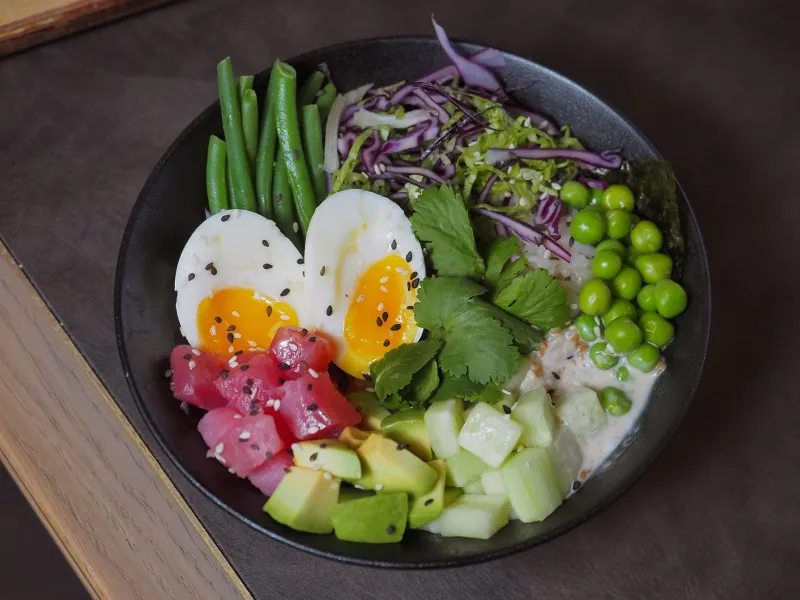
Raw beets and shredded purple cabbage are another pair of well-meaning troublemakers. Both are high in fiber and antioxidants, and both bleed color aggressively once they hit moisture. That gorgeous magenta hue spreading across your bowl? That's beet juice soaking into your fish and rice, adding an earthy sweetness that clashes with umami-forward marinades. By the time you get to the bottom of the bowl, everything has turned vaguely pink and vaguely wrong.
Kale — and its trendier cousin, raw chard — introduces a grassy bitterness that competes with sesame and soy rather than complementing them. Traditional poke greens, when used at all, tend to be mild: cucumber, shredded iceberg, or seaweed salad, which shares the ocean flavor profile of the fish itself.
Quinoa as a base substitute has already been mentioned, but it deserves a second look. Beyond the flavor issue, quinoa's texture is fundamentally wrong for poke. Good sushi-grade rice has a slight chew and a gentle stickiness that helps it absorb sauce without turning mushy. Quinoa's tiny, springy grains don't absorb — they sit alongside the sauce, leaving you with a bowl that's either too dry or too soupy depending on how much dressing you add.
The Instagram Effect Is Real (And It's Messing With Your Meal)
There's a psychological layer to this worth acknowledging. Research in consumer behavior consistently shows that food marketed as "healthy" gets rated as less satisfying and less filling, even when calorie counts are identical to less-healthy versions. We've essentially trained ourselves to expect healthy food to taste like a compromise.
Poke restaurants know this. Some lean into it hard, offering bowls with names like "The Cleanse" or "Glow Bowl" that are visually stunning — layered with purple cabbage, microgreens, golden beets, and chia seed pudding drizzle — and photographically irresistible. These bowls move product. They go viral on TikTok. They bring in new customers who are excited about eating well.
But ask the regulars what they actually reorder. It's almost never the Glow Bowl.
"I've watched this play out hundreds of times," says registered dietitian Priya Nambiar, who consults for several restaurant groups in the Pacific Northwest. "People come in wanting to feel virtuous, they order the most health-coded bowl on the menu, and then they leave feeling like something was missing. The next visit, they go back to the classic build. The problem isn't that healthy food can't taste good — it absolutely can. The problem is that we're adding healthy ingredients to a dish without asking whether they belong there."
So What Actually Works?
The good news is that eating a genuinely nutritious poke bowl doesn't require blowing up the flavor architecture. It just requires being strategic.
Avocado is the gold standard here — it's nutrient-dense, adds healthy fat that actually enhances the richness of the fish, and its mild, creamy flavor plays beautifully with both soy and citrus-based sauces. Edamame adds plant protein without disrupting anything. Cucumber brings crunch and freshness. Seaweed salad amplifies the oceanic quality of the fish rather than competing with it.
Even brown rice, often dismissed as a flavorless health swap, can work if the bowl is built around it — leaning into nuttier, earthier sauces like miso-ginger that complement the grain rather than fight it.
The through line? Additions that share flavor DNA with the core ingredients. Things that say "ocean" or "umami" or "bright acid" rather than "I came from a different cuisine entirely."
The Takeaway From the Tab
At Poke Tab, we're not here to talk you out of eating well. Poke is already one of the more nutritionally balanced fast-casual options out there — quality protein, fresh vegetables, healthy fats, and a reasonable amount of carbs in one bowl. You don't need to hack it into a superfood delivery system to feel good about what you're eating.
What we'd rather see? Bowls built with intention. Where every ingredient is there because it makes the bowl better — not just because it makes the menu description longer. Because the best poke you'll ever eat probably isn't the one loaded with the most buzzword ingredients. It's the one where every bite tastes exactly like it was supposed to.