Two Worlds, One Bowl: The Tension Between Hawaiian Tradition and American Fast-Casual Culture
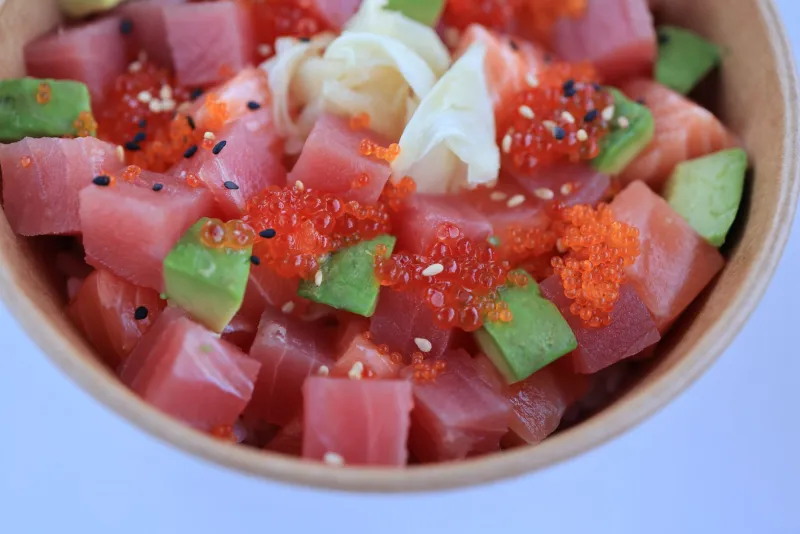
Walk into almost any food hall in a major American city and you'll find it: the poke bowl station, usually bright and branded, with a laminated menu of proteins, sauces, and toppings arranged in a logical grid. Order at the counter. Pay on a tablet. Pick it up in four minutes. Done.
Now picture the other version—a fisherman in Hawaii pulling fresh ahi from the Pacific, cutting it right there on the boat, seasoning it with sea salt, limu seaweed, and roasted kukui nuts, and eating it with his crew before they even make it back to shore. No menu. No branding. No delivery window.
These two images represent the same food. And that gap between them is where a genuinely complicated cultural conversation is happening.
What Poke Actually Was Before It Was a Trend
The word poke (pronounced poh-kay) means "to slice or cut" in Hawaiian. And for generations, it was exactly that—a simple preparation of freshly caught fish, seasoned minimally and shared communally. It wasn't restaurant food. It was working food. Fishermen's food. Food that existed because people had access to the ocean and knew what to do with what it gave them.
Cultural historians who study indigenous Hawaiian foodways point out that poke in its earliest form wasn't even about ahi tuna specifically. Reef fish, octopus, sea urchin—whatever was fresh and available went into the bowl. The philosophy was abundance and immediacy, not curation.
The dish started appearing in Hawaiian grocery stores and casual lunch spots in the mid-20th century, becoming a fixture of local food culture long before the mainland ever caught on. By the 1990s and early 2000s, poke competitions were a legitimate cultural institution on the islands. Local families had their own recipes. Neighborhoods had their own spots.
Then around 2012, something clicked on the mainland. Fast-casual was booming. Health-conscious eating was trending. And poke—fresh, colorful, customizable—fit the moment perfectly.
The Fast-Casual Machine and What It Does to Food
The American fast-casual model is very good at one thing: taking something with regional identity and making it scalable. Burritos, ramen, Korean BBQ—all of them have gone through this process. You get wider access, lower price points (relatively speaking), and a version of the food that millions of people can experience.
What you sometimes lose is context.
Chefs who grew up in Hawaii and now work on the mainland describe a strange experience of watching their home cuisine get reinterpreted at scale. The flavors are often close. The ingredients are sometimes even good. But the relationship to the food is different. On the mainland, poke is often a solo lunch eaten at a desk. In Hawaii, it's still frequently communal—bought in bulk from a grocery deli counter, shared at a family gathering, brought to a beach.
That's not a small distinction. The ritual around food shapes how we understand and value it.
Hawaiian community members living on the mainland often have complicated feelings about the poke boom. On one hand, it's genuinely exciting to see something from home become beloved. On the other hand, there's a real frustration when the cultural origin story gets stripped away—when poke becomes just another bowl option without any acknowledgment of where it came from or who built it.
Delivery Culture and the Distance Problem
If fast-casual created some distance from the original, delivery culture adds another layer. A poke bowl sitting in a sealed container in the back of a rideshare for 25 minutes is about as far from a freshly cut piece of ahi on a fishing boat as you can get while technically eating the same thing.
The texture changes. The temperature changes. The experience of eating it changes. And yet, delivery poke is enormously popular—because convenience is a real and legitimate human need, and not everyone lives near a good poke spot.
Some poke operators have started designing their menus specifically around delivery durability, choosing sauces that don't make rice soggy, packing components separately, and rethinking portion structures so the bowl holds up in transit. This is smart business. But it's also another step away from the original philosophy of freshness and immediacy that defined the dish.
What Authentic Even Means Anymore
Here's the honest part of this conversation: authenticity in food is never static. Hawaiian poke itself absorbed Japanese influences—soy sauce, sesame oil, masago—over generations of cultural exchange in the islands. The dish has always evolved. Calling for a return to some pristine original form ignores how food actually works.
What matters more, perhaps, is acknowledgment and intention. A poke shop that knows where the dish comes from, sources its fish responsibly, and puts genuine care into the bowl is doing something meaningfully different from one that slapped a tiki font on a logo and called it aloha.
Some of the best poke spots on the mainland are run by people with deep connections to Hawaiian food culture—either by background or by deliberate education. These places tend to feel different. The menu might be smaller. The sauces might be less predictable. But there's a coherence to the food that you can taste.
Can Both Things Be True at Once?
The poke paradox isn't really a paradox. It's just the reality of what happens when a regional food culture meets a national appetite.
You can appreciate the accessibility that the fast-casual and delivery model brings to poke—millions of Americans are now eating fresh fish in new ways, which is genuinely good. And you can simultaneously hold space for the concern that something real gets diluted in that process.
The most useful thing any of us can do is stay curious. Ask where the fish comes from. Look for shops that acknowledge Hawaii in a meaningful way, not just as an aesthetic. Learn a little about the history before you tap "add to cart."
The bowl on your desk and the bowl on that fishing boat are connected by more than ingredients. Keeping that thread visible—even loosely—feels like the least we can do.